Barcelona’s 2–1 defeat away to Real Sociedad ended an 11-game league winning streak and trimmed their cushion at the top to a single point over Real Madrid. The scoreline matters, but the timeline matters more. This was a night where Barcelona didn’t collapse in performance — they lost control of moments.
Hope for eight minutes, then a reset in sixty second
Matches like this often hinge less on who “deserves” it and more on who manages the crucial windows. Barcelona finally found a breakthrough when Marcus Rashford, introduced from the bench, headed in the equaliser — the kind of goal that usually flips a game’s emotional gravity.
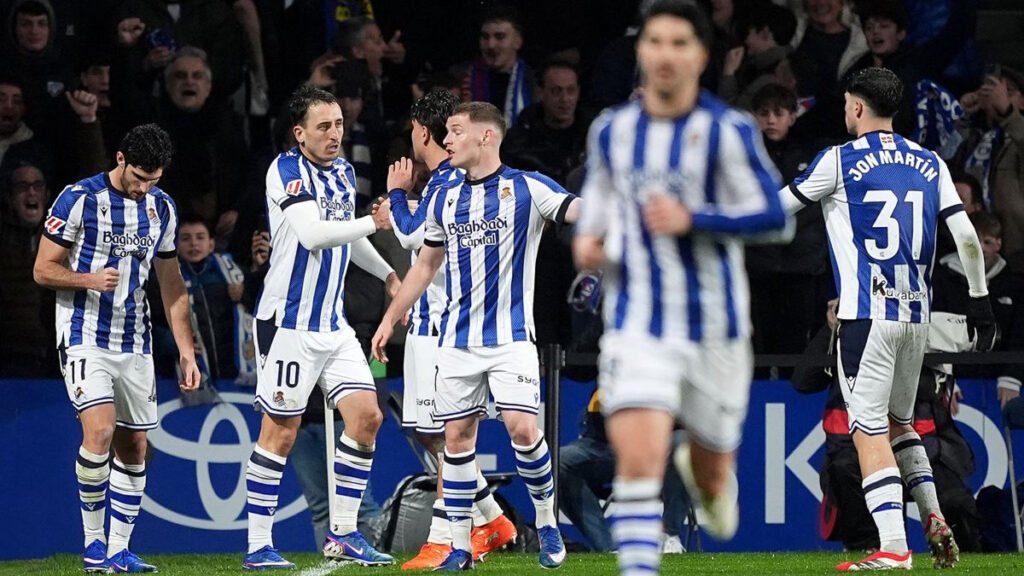
But that swing barely had time to settle. Real Sociedad reclaimed the lead almost immediately through Gonçalo Guedes, turning Barcelona’s relief into urgency in the span of a minute. From there, everything Barcelona did felt rushed — not because the plan disappeared, but because time started dictating choices.
And that’s the detail that could reshape the reading of this result: Barcelona didn’t look tactically dismantled. They looked like a team that couldn’t slow the match down when it needed to breathe.
Offside lines, VAR calls, and the woodwork: when margins take over
Barcelona created enough to change the outcome, yet the evening kept drifting into fine-print football: multiple goals ruled out, tight offside decisions, and even a penalty initially awarded and then removed because the move began from an offside position. It’s the sort of pattern that drains patience — the more the game becomes about millimetres, the harder it is to keep the same rhythm.
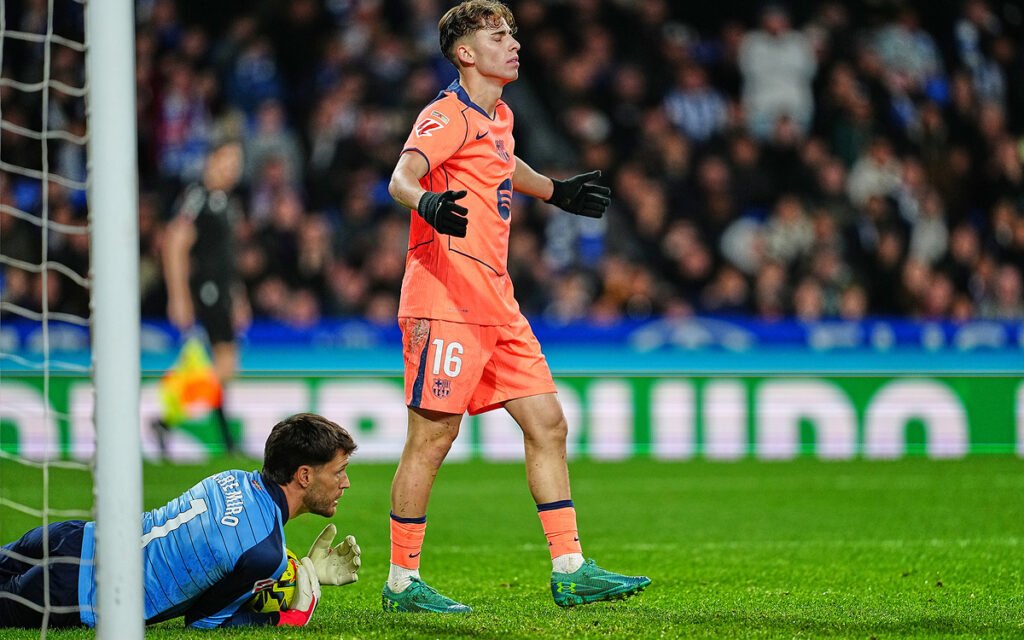
The second half only amplified it. Shots struck the frame, and Remiro delivered the kind of goalkeeping performance that forces a front line to try harder rather than smarter. The more Barcelona chased an equaliser, the more every action carried the weight of “now” — and that pressure changes execution.
Sociedad’s approach was simpler and, on the night, sharper: protect the lead, pick the right exits, and keep the game moving at their tempo — even after a late red card for Carlos Soler. It wasn’t pretty, but it was time management as a competitive weapon.
One point at the top — and the season clock getting louder
A third league defeat isn’t a crisis by itself. The issue is the framing: the lead has shrunk, the calendar is unforgiving, and “bad nights” become more expensive when the margin is one point. Barcelona remain top, but now every fixture arrives with a layer of consequence that didn’t exist a week ago.
What happens next may depend less on Barcelona’s ceiling and more on their composure in the key phases: the minutes after scoring, the minutes after setbacks, and the minutes when the match turns into a sequence of tight calls and tighter nerves.
This loss doesn’t close the story. It changes the tension. And it sets up the next chapter as a test of control — over tempo, over emotions, and over the seconds that decide a season.