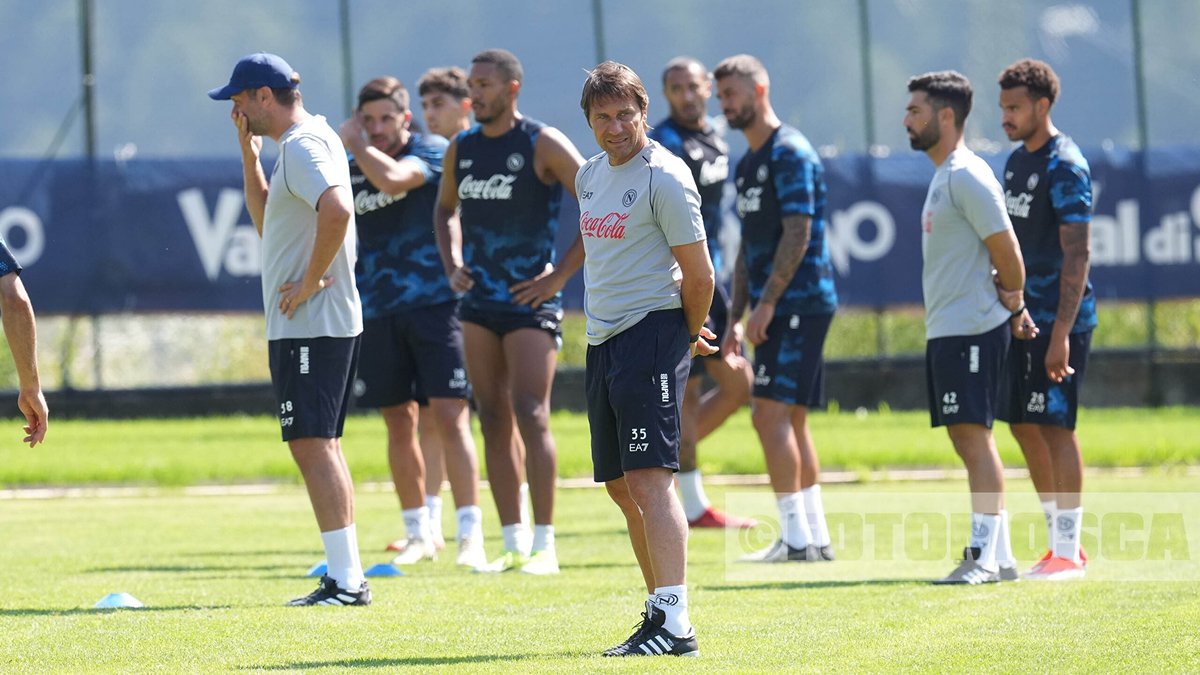
Rasmus Højlund is back in the spotlight in Naples, but not purely because of goals. Antonio Conte has pushed the conversation toward a bigger theme at a critical point in the season: what happens to a young No.9 when form dips — and what does a club do next?
Trust is more than a selection call
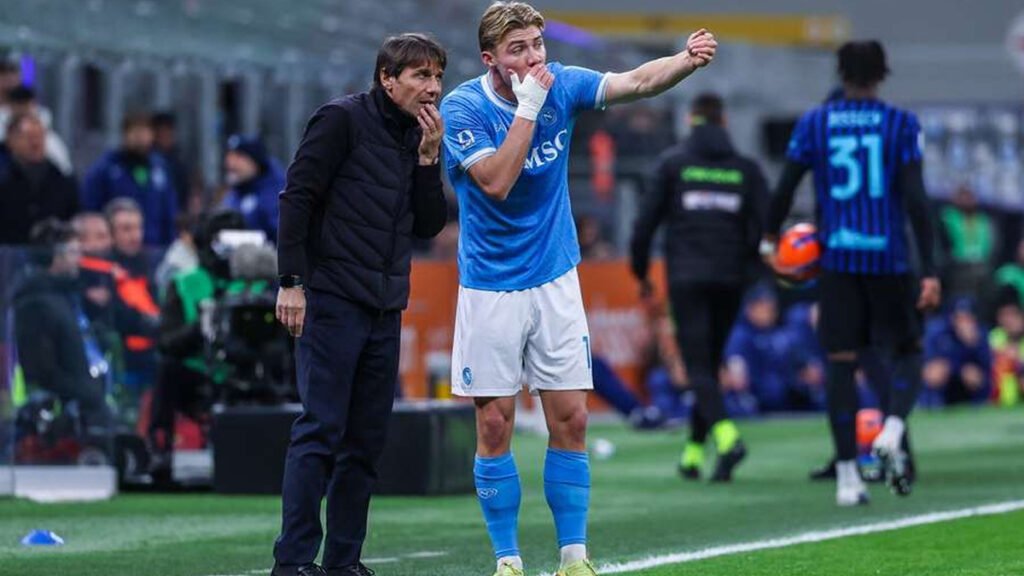
Conte’s recent messaging reads like a critique of a modern coaching shortcut: when the output drops, the blame often lands on the player. His point is less about protecting a striker from pressure and more about responsibility — adapting training, demands, and context instead of treating confidence as a switch that can be flipped on matchday.
Let’s slow it down for a second: this isn’t only about a comment or a headline. It’s about the process behind a young forward — and whether that process holds when the easy goals disappear.
From “expensive potential” to a working project
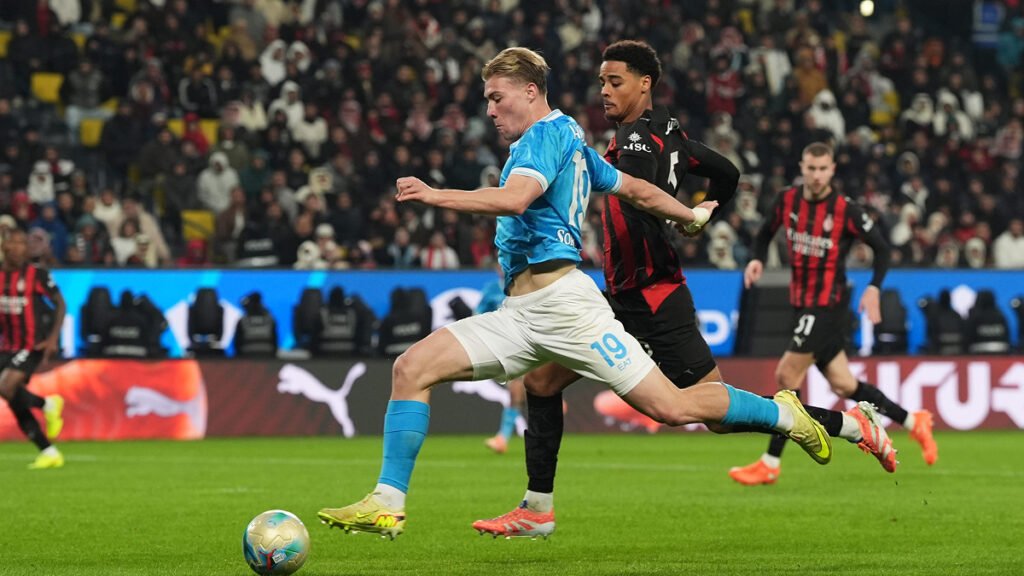
Højlund arrived at Napoli on a season-long loan with a clear pathway toward permanence if Champions League qualification is secured. The move reframed him: not as a quick fix, but as a striker to be built within a defined structure.
His Manchester United spell had moments of promise and uneven stretches. The raw total (26 goals in 95 appearances) suggests productivity, yet the broader feel was more complicated — a player asked to solve problems that weren’t always designed around his profile, with expectations rising faster than the support system could stabilize.
When the goals stop, the plan matters
The early signs in Italy were encouraging: nine goals in his first 20 appearances. Since then, the drought has shifted the tone — from optimism to scrutiny, especially after his last goals came in a late-December brace away at Cremonese.
This is where Conte’s angle becomes practical rather than philosophical. The key question isn’t just when the next goal comes, but how the club helps the striker find it: the patterns, the training focus, the roles in and out of possession, and the mental rhythm that doesn’t collapse after two quiet games.
Napoli’s leadership has also hinted they see the long-term picture, treating a permanent deal as an expectation rather than a gamble — but that belief ultimately depends on what happens in the table.
The next step is the hardest one
Napoli are in the top end of Serie A and chasing Champions League football, a race that rarely allows prolonged individual slumps. Sunday’s meeting with Juventus lands in the middle of that tension: it’s a major fixture, but also a measuring stick for whether Napoli’s “project” mindset holds under noise.
And the lingering question remains: if trust is the story, what does it look like when pressure becomes the loudest voice in the room?