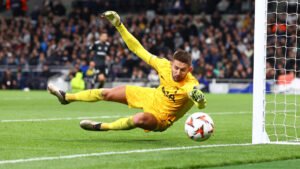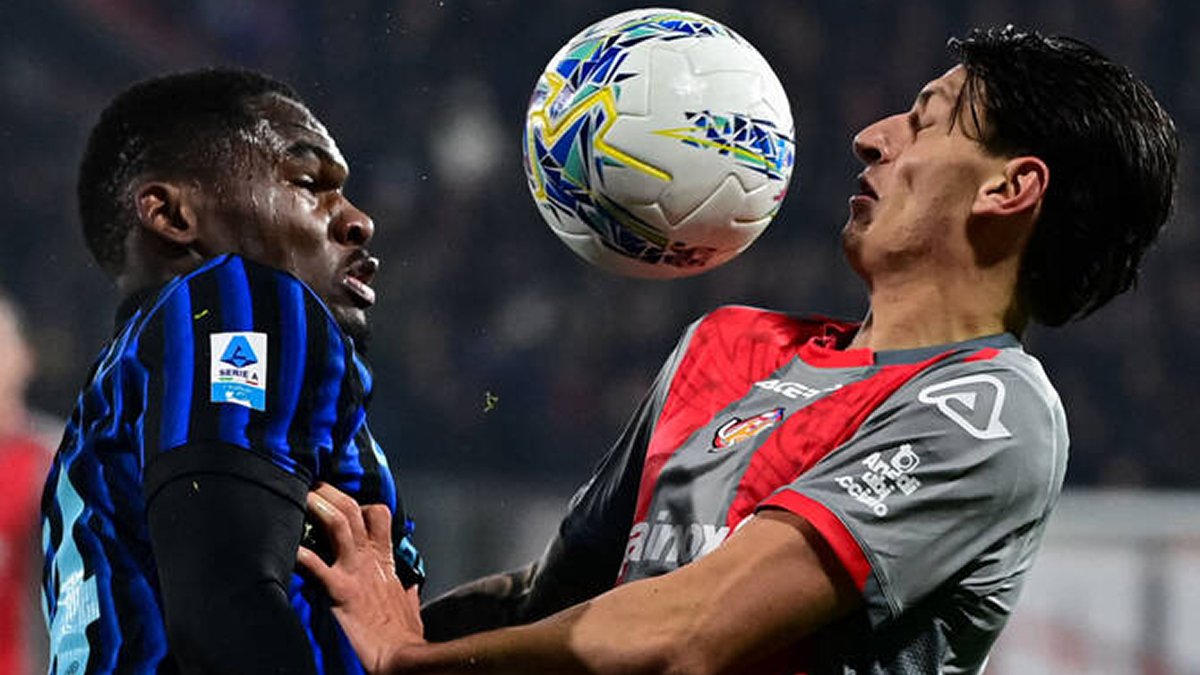
Inter’s trip to Cremonese briefly stopped when a flare thrown from the away end struck home goalkeeper Emil Audero. For a title-chasing leader, it should have been a straightforward night — yet the bigger story became how quickly trust can evaporate inside a stadium.
One incident, a wider loss of trust
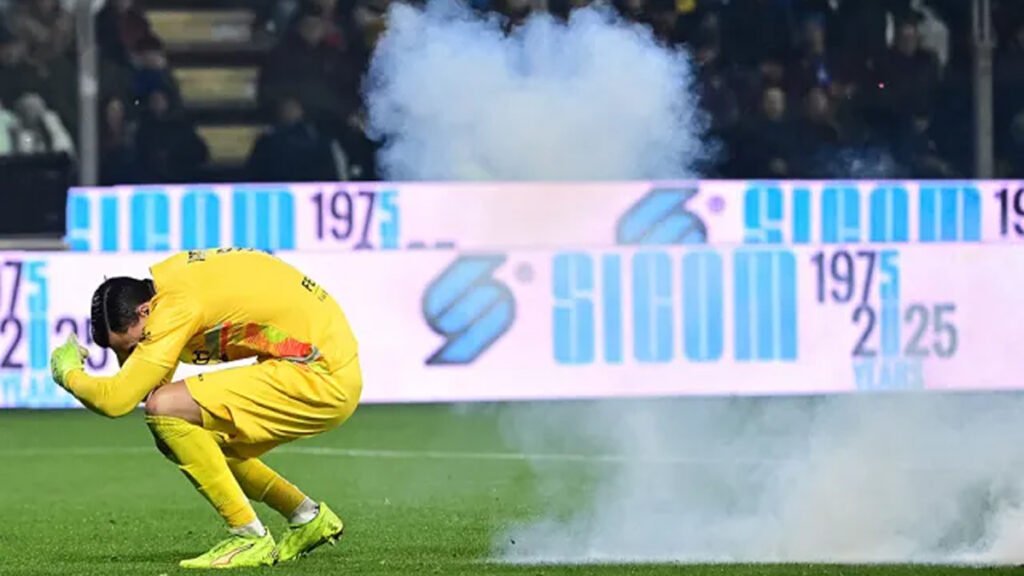
Early in the second half, with play nowhere near the box, a flare landed in the penalty area and hit Audero. Medical staff rushed in, teammates reacted instantly, and the match paused for a few minutes. Audero continued, but the signs were unsettling: a cut to his right leg and concerns about hearing in his right ear.
And that’s the point where the moment stops being “just a delay” — and starts becoming a test of confidence in the environment around the game.
When the leader plays, the league is on trial
Inter still looked like a team built for control: they led, they managed tempo, and they ultimately took the win. But episodes like this land harder at the top level, because they raise a simple question: if safety can be breached so easily, what exactly is being protected — and by whom?
Chivu and Inter’s players were seen urging restraint toward the stands. It’s a familiar scene, but it also exposes a reality: the sport often relies on its own participants to calm situations they didn’t create.
Playing on doesn’t mean moving on
Inter’s 2–0 win featured a Martínez header from a Dimarco corner and a long-range Zieliński strike after a Henrique pass. The standings will remember the points. The night itself will be remembered for the stoppage — and for how thin the line can be between spectacle and risk.
What happens next matters as much as the scoreline: whether the response becomes a one-off sanction, or a broader push to rebuild trust through prevention — before the next flare forces the same conversation again.