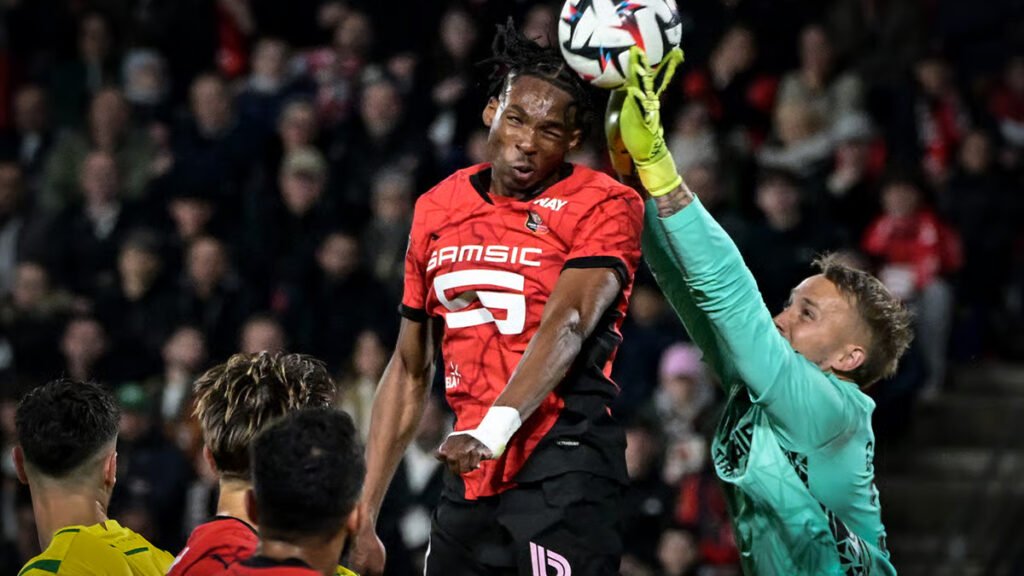
Liverpool have secured a summer move for centre-back Jérémy Jacquet from Rennes, with the 20-year-old finishing the season in Ligue 1 before heading to Anfield.
It reads like a straightforward transfer win, but the timing hints at something bigger: a club trying to shape its next defensive era before the urgent questions arrive.
A deal that looks forward, not sideways
Jacquet is not being parachuted in as an emergency fix. The agreement is structured for July, with a long-term contract widely reported, and that detail matters: Liverpool are choosing certainty in planning over improvisation.
When elite clubs commit early, they are usually betting on a changing picture in their own squad.
That is where the story slows down and widens beyond one player.
Recruitment as a reconstruction tool
At the top end of the Premier League, defenders are rarely bought in isolation. They are recruited in profiles: pace, aerial comfort, build-up reliability, adaptability to different partners.
Jacquet fits the “development-ready” bracket — young, already trusted at senior level, and bought with a runway rather than a deadline.
Reports place the total package around £60m and the contract running into the early 2030s, a signal of how central the club expects him to be once the summer reset begins.
It is also a hedge against the market. Liverpool learned last year how quickly a late deal can collapse, and this move feels designed to avoid that same chaos.
Beating the traffic
Chelsea were linked to Jacquet and, according to reporting, were far enough along to discuss a fee before their internal centre-back planning shifted.
Once it became clear the player preferred Liverpool’s route, talks moved quickly. That sequence matters because it shows how these battles are often decided: not by one dramatic moment, but by a club’s clarity about when a player is needed and what the pathway looks like.
What remains unanswered is the role. Does Jacquet arrive as a starter-in-waiting, or as depth with a fast track?
The next few months — renewals, exits, and the shape of Liverpool’s summer — will decide how quickly the “project signing” becomes a first-team solution.